

Cairo Beyond the Pyramids: 10 Experiences Most Tourists Miss
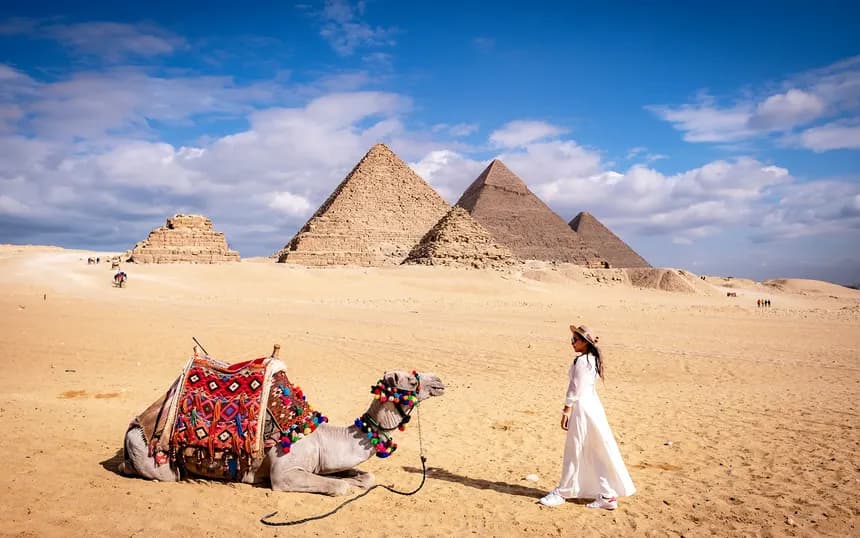
Everyone visits the Pyramids. But Cairo's real magic lies deeper — in its medieval alleyways, Coptic churches, rooftop cafés, and one of the world's greatest museums. Here's how to find it.
Cairo Is Overwhelming — And That's the Point
Cairo is the largest city in Africa, home to 22 million people (or 30 million if you count the greater metropolitan area). It is loud, chaotic, beautiful, exhausting, and completely intoxicating. Most visitors spend a morning at the Pyramids and the Sphinx — worthy, obviously — and then leave. But Cairo rewards those who stay longer and dig deeper. Here are ten experiences that most visitors never find.
1. The Egyptian Museum at Dusk
The Egyptian Museum in Tahrir Square holds 170,000 artefacts including the complete contents of Tutankhamun's tomb. Most visitors rush through it in two hours in the heat of the day. Go at 4pm instead, when the coach tours have left, and take your time with the Tutankhamun galleries. The golden death mask is one of the most extraordinary objects ever made. The museum is famously chaotic in its organisation — labels are often missing, objects are sometimes stored on top of each other — but that chaos is part of its strange charm.
2. Khan el-Khalili at Night
Cairo's medieval bazaar has been operating since 1382. During the day it's a tourist trap. At night, after 9pm, it transforms — locals come out to shop, the food stalls open, and the narrow alleyways fill with smoke from shisha pipes and the smell of spices and grilled meat. El-Fishawi café, tucked into an alleyway, has been open 24 hours a day for over 200 years. Order a mint tea and watch Cairo's nightlife flow past.
3. The Mosque of Ibn Tulun
Built in 879 AD, the Mosque of Ibn Tulun is the oldest mosque in Cairo still in its original form and one of the largest in the world. Its vast courtyard can hold 100,000 worshippers. Unlike Cairo's more ornate mosques, Ibn Tulun's beauty is in its austerity — red brick arcades, a spiral minaret unique in Egypt, and a meditative silence that the more famous mosques rarely offer. Climb the minaret for one of Cairo's best views.
4. Coptic Cairo
In the ancient fortress district of Babylon, Coptic Cairo preserves Egypt's Christian heritage — a community that predates the Arab conquest by six centuries. The Hanging Church (Al-Moallaqa) is built atop two Roman towers, its nave suspended over a passageway below. The Church of St Sergius is built over the crypt where, according to tradition, the Holy Family sheltered during their flight to Egypt. The Coptic Museum holds the world's largest collection of Coptic art.
5. A Nile Dinner Cruise
Every evening, dinner cruise boats depart from Dokki and Zamalek, moving slowly between Cairo's lit bridges while belly dancers and musicians perform. The Cairo skyline reflected on the Nile, the warm night air, the music — this is the city at its most seductive. Book in advance and request an outside table.
6. Saqqara Without the Crowds
Everyone goes to Giza. Almost no one goes to Saqqara, 30km south. The Step Pyramid of Djoser (2650 BC) is the world's oldest complete stone building — it predates the Great Pyramid by 70 years. Around it sprawls a vast necropolis of mastabas, smaller pyramids, and underground tombs, many decorated with extraordinary painted reliefs showing scenes of daily life in the Old Kingdom.
7. Al-Azhar Park
In the 1990s, the Aga Khan Trust for Culture transformed a 500-year-old rubbish dump into a 74-acre park overlooking the medieval city. Al-Azhar Park is Cairo's green lung. From the park's elevated terraces you get one of Cairo's finest panoramas: the medieval minarets of Islamic Cairo, the Citadel on its limestone plateau, and on clear days the distant pyramids on the horizon.
8. Breakfast at a Local Foul Shop
Cairo's street food is extraordinary and almost completely ignored by tourists. Start your day at a foul (fava bean) shop. Order foul medames (beans cooked with garlic, lemon, and cumin), ta'ameya (Egyptian falafel, brilliantly herby), and fresh flatbread. The whole meal costs about 30 Egyptian pounds. It's what Egyptians have eaten for breakfast for thousands of years.
9. The Citadel and Muhammad Ali Mosque
Saladin began building the Citadel in 1176 as a fortified city within a city. The Muhammad Ali Mosque — built by the Albanian-Ottoman ruler who modernised Egypt in the early 19th century — crowns the Citadel with its Ottoman domes and slender minarets. The interior, clad in alabaster, is among the most beautiful mosque interiors in Egypt. The view from the Citadel terrace takes in the whole of Cairo.
10. Desert Road to Alexandria
The desert road between Cairo and Alexandria passes the ancient site of Wadi Natrun, a valley of Coptic monasteries founded in the 4th century by the Desert Fathers. Some of the world's oldest Christian communities still live here, continuing traditions of prayer and manuscript copying stretching back 1,700 years. Four monasteries are open to visitors.
Getting Around Cairo
The Cairo Metro is fast, cheap, and covers the main tourist areas. Uber works well and is cheaper than haggling with taxi drivers. The medieval districts of Islamic Cairo and Coptic Cairo are best explored on foot. Give yourself more time than you think you need. Cairo always surprises.