

Aswan & Abu Simbel: A Journey to the Edge of Ancient Nubia
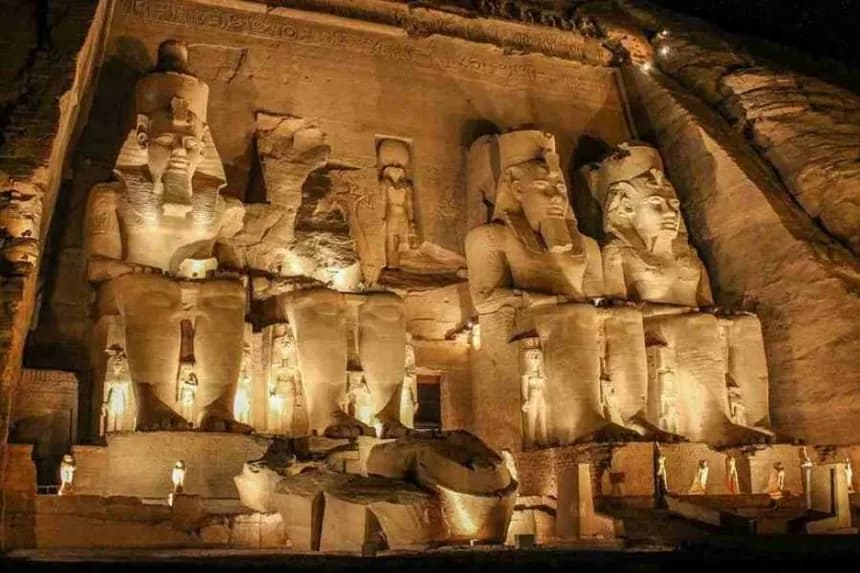
From the tranquil Nile at Aswan to the colossal temples of Abu Simbel saved from rising waters, southern Egypt offers one of the world's most dramatic travel experiences.
Aswan: Where the Nile Slows Down
Aswan is Egypt's southernmost major city, sitting at the first cataract of the Nile where granite boulders break the river into channels and islands. It's a gentler, warmer, and more relaxed place than Cairo or Luxor — a city where Nubian culture colours everything from the painted houses to the music drifting across the water. The light here is extraordinary: softer, more golden, unlike anywhere else in Egypt.
Philae Temple: The Island Sanctuary
The Temple of Isis at Philae is one of Egypt's most romantic ancient sites. Dedicated to the goddess Isis — the divine mother who reassembled the body of Osiris and brought him back to life — the temple was built during the Ptolemaic period and completed under Roman rule. When the Aswan High Dam was built, the original island of Philae flooded completely. In one of history's great engineering rescues, UNESCO dismantled the entire temple block by block and rebuilt it on the nearby island of Agilkia. Today you reach it by motorboat, gliding past papyrus reeds and granite outcrops. The Sound and Light show at night is genuinely spectacular.
The Aswan High Dam
Built between 1960 and 1970 with Soviet assistance, the Aswan High Dam is one of the 20th century's great engineering achievements. It created Lake Nasser — one of the world's largest man-made lakes — stretching 550 kilometres south into Sudan. The dam controls the Nile's annual flood, generates 10 gigawatts of electricity, and transformed Egyptian agriculture. It also drowned dozens of ancient Nubian villages and forced the relocation of 100,000 people — a human cost that still resonates in Nubian communities today.
The Nubian Villages
The villages on the west bank of the Nile near Aswan are painted in vivid blues, yellows, and oranges, decorated with murals of crocodiles, fish, and pharaonic motifs. The Nubian people are among Egypt's most welcoming — invite yourself for tea, visit a family home, and you'll find a culture that is distinct from Arab Egypt in music, language, cuisine, and architecture. Many families keep Nile crocodiles as pets in small pools — a tradition stretching back to when the Nile's crocodile population was plentiful.
Abu Simbel: The Great Temple of Ramesses II
Abu Simbel is 280 kilometres south of Aswan, sitting on the shore of Lake Nasser near the Sudanese border. Two massive rock-cut temples were commissioned by Ramesses II around 1264 BC. The Great Temple is fronted by four colossal seated statues of Ramesses, each 20 metres tall, carved directly from the sandstone cliff. Inside, a 60-metre corridor leads to an inner sanctuary where, twice a year (February 22 and October 22 — the dates of Ramesses's birthday and coronation), the rising sun illuminates three of the four statues inside the inner chamber. The fourth, the god of the underworld Ptah, remains in shadow permanently.
The temples were another UNESCO rescue operation: between 1964 and 1968, the entire complex was cut into 807 blocks weighing up to 33 tonnes each and reassembled 65 metres higher and 200 metres back from the original site, above the rising waters of Lake Nasser. The engineering feat cost $40 million — equivalent to $350 million today.
Getting to Abu Simbel
Most visitors fly from Aswan (35 minutes) or drive in a convoy along the desert highway (3.5 hours, departing 4am). The convoy option is cheaper and the convoy itself — dozens of vehicles moving through the black Sahara before dawn — is an experience in itself. The temple is usually reached by 8am, before the worst of the heat and the day-trip crowds from Aswan.
What to Eat in Aswan
Aswan's food reflects its Nubian identity. Try ful medames (slow-cooked fava beans) for breakfast, kofta grilled over charcoal for lunch, and fresh Nile perch at one of the restaurants on Elephantine Island. Karkade — deep crimson hibiscus tea, served hot or iced — is Aswan's signature drink and is among the most refreshing things you'll drink in Egypt.
Practical Tips
Best time: November to February. Aswan is one of the hottest inhabited places on earth — summer temperatures regularly hit 50°C.
Getting around: Feluccas (traditional sailboats) are the iconic way to move between sites along the Nile. Negotiate a price before boarding.
Abu Simbel timing: Arrive when it opens at 6am — the experience before 9am, with fewer people and cooler air, is categorically better.
Stay: Sofitel Legend Old Cataract is one of the great colonial hotels of Egypt, with a terrace overlooking the Nile where Agatha Christie wrote Death on the Nile.